Deepti Gurdasani is a British-Indian clinical epidemiologist and statistical geneticist who is a senior lecturer in machine learning at the Queen Mary University of London. Her research considers the genetic diversity of African Populations. Throughout the COVID-19 pandemic, Gurdasani has provided the public with her analysis of the evolving situation mainly on the Twitter platform. == Early life and education == Gurdasani was an undergraduate and medical student at the Christian Medical College Vellore at Tamil Nadu Dr. M.G.R. Medical University. After earning her medical degree and qualifying in internal medicine, she moved to the United Kingdom, where she worked toward a research doctorate in genetic epidemiology at Wolfson College, Cambridge. Her doctoral research involved the design of strategies to understand complex diseases in diverse populations. == Research and career == In 2013, Gurdasani joined the Wellcome Sanger Institute as a postdoctoral fellow, where she worked on the genomic diversity of African populations and how this diversity impacts susceptibility to disease. She makes use of dense genotypes and whole genome sequences to better understand how population movements determined genetic structure. In particular, Gurdasani develops machine learning algorithms to large-scale clinical data sets. At the Sanger Gurdasani co-led the African Genome Variation Project and the Uganda Resource Project. Gurdasani moved to Queen Mary University of London in 2019, where she created deep learning approaches for clinical prediction and the identification of novel, genome-based drug targets. During the COVID-19 pandemic Gurdasani has provided public commentary on the pandemic, making use of both Twitter and print media to share information on the evolving situation. She has researched the incidence of long covid in the UK. In 2021 Gurdasani started to write for The Guardian. == Selected publications == Deepti Gurdasani; Tommy Carstensen; Fasil Tekola-Ayele; et al. (3 December 2014). "The African Genome Variation Project shapes medical genetics in Africa". Nature. 517 (7534): 327–332. doi:10.1038/NATURE13997. ISSN 1476-4687. PMC 4297536. PMID 25470054. Wikidata Q34979569. Nisreen A Alwan; Rochelle Ann Burgess; Simon Ashworth; et al. (15 October 2020). "Scientific consensus on the COVID-19 pandemic: we need to act now". The Lancet. doi:10.1016/S0140-6736(20)32153-X. ISSN 0140-6736. PMC 7557300. PMID 33069277. Wikidata Q100697134. Deepti Gurdasani; Inês Barroso; Eleftheria Zeggini; Manjinder S Sandhu (24 June 2019). "Genomics of disease risk in globally diverse populations". Nature Reviews Genetics. 20 (9): 520–535. doi:10.1038/S41576-019-0144-0. ISSN 1471-0056. PMID 31235872. Wikidata Q93000887. (erratum)
Autoscaling
Autoscaling, (also written as auto scaling, auto-scaling, or known as automatic scaling), is a method used in cloud computing that dynamically adjusts the amount of computational resources in a server farm - typically measured by the number of active servers - automatically based on the load on the farm. For example, the number of servers running behind a web application may be increased or decreased automatically based on the number of active users on the site. Since such metrics may change dramatically throughout the course of the day, and servers are a limited resource that cost money to run even while idle, there is often an incentive to run "just enough" servers to support the current load while still being able to support sudden and large spikes in activity. Autoscaling is helpful for such needs, as it can reduce the number of active servers when activity is low, and launch new servers when activity is high. Autoscaling is closely related to, and builds upon, the idea of load balancing. == Advantages == Autoscaling offers the following advantages: For companies running their own web server infrastructure, autoscaling typically means allowing some servers to go to sleep during times of low load, saving on electricity costs (as well as water costs if water is being used to cool the machines). For companies using infrastructure hosted in the cloud, autoscaling can mean lower bills, because most cloud providers charge based on total usage rather than maximum capacity. Even for companies that cannot reduce the total compute capacity they run or pay for at any given time, autoscaling can help by allowing the company to run less time-sensitive workloads on machines that get freed up by autoscaling during times of low traffic. Autoscaling solutions, such as the one offered by Amazon Web Services, can also take care of replacing unhealthy instances and therefore protecting somewhat against hardware, network, and application failures. Autoscaling can offer greater uptime and more availability in cases where production workloads are variable and unpredictable. Autoscaling differs from having a fixed daily, weekly, or yearly cycle of server use in that it is responsive to actual usage patterns, and thus reduces the potential downside of having too few or too many servers for the traffic load. For instance, if traffic is usually lower at midnight, then a static scaling solution might schedule some servers to sleep at night, but this might result in downtime on a night where people happen to use the Internet more (for instance, due to a viral news event). Autoscaling, on the other hand, can handle unexpected traffic spikes better. == Terminology == In the list below, we use the terminology used by Amazon Web Services (AWS). However, alternative names are noted and terminology that is specific to the names of Amazon services is not used for the names. == Practice == === Amazon Web Services (AWS) === Amazon Web Services launched the Amazon Elastic Compute Cloud (EC2) service in August 2006, that allowed developers to programmatically create and terminate instances (machines). At the time of initial launch, AWS did not offer autoscaling, but the ability to programmatically create and terminate instances gave developers the flexibility to write their own code for autoscaling. Third-party autoscaling software for AWS began appearing around April 2008. These included tools by Scalr and RightScale. RightScale was used by Animoto, which was able to handle Facebook traffic by adopting autoscaling. On May 18, 2009, Amazon launched its own autoscaling feature along with Elastic Load Balancing, as part of Amazon Elastic Compute Cloud. Autoscaling is now an integral component of Amazon's EC2 offering. Autoscaling on Amazon Web Services is done through a web browser or the command line tool. In May 2016 Autoscaling was also offered in AWS ECS Service. On-demand video provider Netflix documented their use of autoscaling with Amazon Web Services to meet their highly variable consumer needs. They found that aggressive scaling up and delayed and cautious scaling down served their goals of uptime and responsiveness best. In an article for TechCrunch, Zev Laderman, the co-founder and CEO of Newvem, a service that helps optimize AWS cloud infrastructure, recommended that startups use autoscaling in order to keep their Amazon Web Services costs low. Various best practice guides for AWS use suggest using its autoscaling feature even in cases where the load is not variable. That is because autoscaling offers two other advantages: automatic replacement of any instances that become unhealthy for any reason (such as hardware failure, network failure, or application error), and automatic replacement of spot instances that get interrupted for price or capacity reasons, making it more feasible to use spot instances for production purposes. Netflix's internal best practices require every instance to be in an autoscaling group, and its conformity monkey terminates any instance not in an autoscaling group in order to enforce this best practice. === Microsoft's Windows Azure === On June 27, 2013, Microsoft announced that it was adding autoscaling support to its Windows Azure cloud computing platform. Documentation for the feature is available on the Microsoft Developer Network. === Oracle Cloud === Oracle Cloud Platform allows server instances to automatically scale a cluster in or out by defining an auto-scaling rule. These rules are based on CPU and/or memory utilization and determine when to add or remove nodes. === Google Cloud Platform === On November 17, 2014, the Google Compute Engine announced a public beta of its autoscaling feature for use in Google Cloud Platform applications. As of March 2015, the autoscaling tool is still in Beta. === Facebook === In a blog post in August 2014, a Facebook engineer disclosed that the company had started using autoscaling to bring down its energy costs. The blog post reported a 27% decline in energy use for low traffic hours (around midnight) and a 10-15% decline in energy use over the typical 24-hour cycle. === Kubernetes Horizontal Pod Autoscaler === Kubernetes Horizontal Pod Autoscaler automatically scales the number of pods in a replication controller, deployment or replicaset based on observed CPU utilization (or, with beta support, on some other, application-provided metrics) == Alternative autoscaling decision approaches == Autoscaling by default uses reactive decision approach for dealing with traffic scaling: scaling only happens in response to real-time changes in metrics. In some cases, particularly when the changes occur very quickly, this reactive approach to scaling is insufficient. Two other kinds of autoscaling decision approaches are described below. === Scheduled autoscaling approach === This is an approach to autoscaling where changes are made to the minimum size, maximum size, or desired capacity of the autoscaling group at specific times of day. Scheduled scaling is useful, for instance, if there is a known traffic load increase or decrease at specific times of the day, but the change is too sudden for reactive approach based autoscaling to respond fast enough. AWS autoscaling groups support scheduled scaling. === Predictive autoscaling === This approach to autoscaling uses predictive analytics. The idea is to combine recent usage trends with historical usage data as well as other kinds of data to predict usage in the future, and autoscale based on these predictions. For parts of their infrastructure and specific workloads, Netflix found that Scryer, their predictive analytics engine, gave better results than Amazon's reactive autoscaling approach. In particular, it was better for: Identifying huge spikes in demand in the near future and getting capacity ready a little in advance Dealing with large-scale outages, such as failure of entire availability zones and regions Dealing with variable traffic patterns, providing more flexibility on the rate of scaling out or in based on the typical level and rate of change in demand at various times of day On November 20, 2018, AWS announced that predictive scaling would be available as part of its autoscaling offering.
Enterprise cognitive system
Enterprise cognitive systems (ECS) are part of a broader shift in computing, from a programmatic to a probabilistic approach, called cognitive computing. An Enterprise Cognitive System makes a new class of complex decision support problems computable, where the business context is ambiguous, multi-faceted, and fast-evolving, and what to do in such a situation is usually assessed today by the business user. An ECS is designed to synthesize a business context and link it to the desired outcome. It recommends evidence-based actions to help the end-user achieve the desired outcome. It does so by finding past situations similar to the current situation, and extracting the repeated actions that best influence the desired outcome. While general-purpose cognitive systems can be used for different outputs, prescriptive, suggestive, instructive, or simply entertaining, an enterprise cognitive system is focused on action, not insight, to help in assessing what to do in a complex situation. == Key characteristics == ECS have to be: Adaptive: They must learn as information changes, and as goals and requirements evolve. They must resolve ambiguity and tolerate unpredictability. They must be engineered to feed on dynamic data in real time, or near real time. In the Enterprise, near-real time learning from data requires an agile information federation approach to ingest incremental data updates as they occur, and an unsupervised learning approach to ensure that new best practice is leveraged across the organization in a timely manner. Interactive: They must interact easily with users so that those users can define their needs comfortably. They may also interact with other processors, devices, and Cloud services, as well as with people. In the Enterprise, interactions are controlled via existing workflows and UIs. Therefore, embedding best practices directly into these existing interfaces, in the context of a specific step, is critical to ensure maximum end-user adoption. Iterative and stateful: They must aid in defining a problem by asking questions or finding additional source input if a problem statement is ambiguous or incomplete. They must “remember” previous interactions in a process and return information that is suitable for the specific application at that point in time. In the Enterprise, business context is often structured by a business process, and therefore sufficiently data-rich to make relevant recommendations without significant iterations from the end-user. A stateful memory of overall interactions across communication channels is critical for understanding of context, as a static profile will not capture intent and outcome potential the way behavior does. Contextual: They must understand, identify, and extract contextual elements such as meaning, syntax, time, location, appropriate domain, regulations, user's profile, process, task and goal. They may draw on multiple sources of information, including both structured and unstructured digital information, as well as sensory inputs (visual, gestural, auditory, or sensor-provided). In the Enterprise, Context is fragmented and must be aggregated across data types, sources, and locations. In most business environments, such data is captured in existing enterprise information systems, and the effort is linked to quickly source and unify such information. It is rare to have to directly process sensor, audio or visual data in real-time as direct input into the enterprise cognitive system. Instead, these data types are captured by Enterprise Applications and pre-processed into a binary or text format prior to consumption by the System. == Business applications powered by an ECS == Bottlenose – trends and brands monitoring Cybereason – security threat monitoring Dataminr – social media monitoring
Outline of machine learning
The following outline is provided as an overview of, and topical guide to, machine learning: Machine learning (ML) is a subfield of artificial intelligence within computer science that evolved from the study of pattern recognition and computational learning theory. In 1959, Arthur Samuel defined machine learning as a "field of study that gives computers the ability to learn without being explicitly programmed". ML involves the study and construction of algorithms that can learn from and make predictions on data. These algorithms operate by building a model from a training set of example observations to make data-driven predictions or decisions expressed as outputs, rather than following strictly static program instructions. == How can machine learning be categorized? == An academic discipline A branch of science An applied science A subfield of computer science A branch of artificial intelligence A subfield of soft computing Application of statistics === Paradigms of machine learning === Supervised learning, where the model is trained on labeled data Unsupervised learning, where the model tries to identify patterns in unlabeled data Reinforcement learning, where the model learns to make decisions by receiving rewards or penalties. == Applications of machine learning == Applications of machine learning Bioinformatics Biomedical informatics Computer vision Customer relationship management Data mining Earth sciences Email filtering Inverted pendulum (balance and equilibrium system) Natural language processing Named Entity Recognition Automatic summarization Automatic taxonomy construction Dialog system Grammar checker Language recognition Handwriting recognition Optical character recognition Speech recognition Text to Speech Synthesis Speech Emotion Recognition Machine translation Question answering Speech synthesis Text mining Term frequency–inverse document frequency Text simplification Pattern recognition Facial recognition system Handwriting recognition Image recognition Optical character recognition Speech recognition Recommendation system Collaborative filtering Content-based filtering Hybrid recommender systems Search engine Search engine optimization Social engineering == Machine learning hardware == Graphics processing unit Tensor processing unit Vision processing unit == Machine learning tools == Comparison of machine learning software Comparison of deep learning software === Machine learning frameworks === ==== Proprietary machine learning frameworks ==== Amazon Machine Learning Microsoft Azure Machine Learning Studio DistBelief (replaced by TensorFlow) ==== Open source machine learning frameworks ==== Apache Singa Apache MXNet Caffe PyTorch mlpack TensorFlow Torch CNTK Accord.Net Jax MLJ.jl – A machine learning framework for Julia === Machine learning libraries === Deeplearning4j Theano scikit-learn Keras === Machine learning algorithms === == Machine learning methods == === Instance-based algorithm === K-nearest neighbors algorithm (KNN) Learning vector quantization (LVQ) Self-organizing map (SOM) === Regression analysis === Logistic regression Ordinary least squares regression (OLSR) Linear regression Stepwise regression Multivariate adaptive regression splines (MARS) Regularization algorithm Ridge regression Least Absolute Shrinkage and Selection Operator (LASSO) Elastic net Least-angle regression (LARS) Classifiers Probabilistic classifier Naive Bayes classifier Binary classifier Linear classifier Hierarchical classifier === Dimensionality reduction === Dimensionality reduction Canonical correlation analysis (CCA) Factor analysis Feature extraction Feature selection Independent component analysis (ICA) Linear discriminant analysis (LDA) Multidimensional scaling (MDS) Non-negative matrix factorization (NMF) Partial least squares regression (PLSR) Principal component analysis (PCA) Principal component regression (PCR) Projection pursuit Sammon mapping t-distributed stochastic neighbor embedding (t-SNE) === Ensemble learning === Ensemble learning AdaBoost Boosting Bootstrap aggregating (also "bagging" or "bootstrapping") Ensemble averaging Gradient boosted decision tree (GBDT) Gradient boosting Random Forest Stacked Generalization === Meta-learning === Meta-learning Inductive bias Metadata === Reinforcement learning === Reinforcement learning Q-learning State–action–reward–state–action (SARSA) Temporal difference learning (TD) Learning Automata === Supervised learning === Supervised learning Averaged one-dependence estimators (AODE) Artificial neural network Case-based reasoning Gaussian process regression Gene expression programming Group method of data handling (GMDH) Inductive logic programming Instance-based learning Lazy learning Learning Automata Learning Vector Quantization Logistic Model Tree Minimum message length (decision trees, decision graphs, etc.) Nearest Neighbor Algorithm Analogical modeling Probably approximately correct learning (PAC) learning Ripple down rules, a knowledge acquisition methodology Symbolic machine learning algorithms Support vector machines Random Forests Ensembles of classifiers Bootstrap aggregating (bagging) Boosting (meta-algorithm) Ordinal classification Conditional Random Field ANOVA Quadratic classifiers k-nearest neighbor Boosting SPRINT Bayesian networks Naive Bayes Hidden Markov models Hierarchical hidden Markov model ==== Bayesian ==== Bayesian statistics Bayesian knowledge base Naive Bayes Gaussian Naive Bayes Multinomial Naive Bayes Averaged One-Dependence Estimators (AODE) Bayesian Belief Network (BBN) Bayesian Network (BN) ==== Decision tree algorithms ==== Decision tree algorithm Decision tree Classification and regression tree (CART) Iterative Dichotomiser 3 (ID3) C4.5 algorithm C5.0 algorithm Chi-squared Automatic Interaction Detection (CHAID) Decision stump Conditional decision tree ID3 algorithm Random forest SLIQ ==== Linear classifier ==== Linear classifier Fisher's linear discriminant Linear regression Logistic regression Multinomial logistic regression Naive Bayes classifier Perceptron Support vector machine === Unsupervised learning === Unsupervised learning Expectation-maximization algorithm Vector Quantization Generative topographic map Information bottleneck method Association rule learning algorithms Apriori algorithm Eclat algorithm ==== Artificial neural networks ==== Artificial neural network Feedforward neural network Extreme learning machine Convolutional neural network Recurrent neural network Long short-term memory (LSTM) Logic learning machine Self-organizing map ==== Association rule learning ==== Association rule learning Apriori algorithm Eclat algorithm FP-growth algorithm ==== Hierarchical clustering ==== Hierarchical clustering Single-linkage clustering Conceptual clustering ==== Cluster analysis ==== Cluster analysis BIRCH DBSCAN Expectation–maximization (EM) Fuzzy clustering Hierarchical clustering k-means clustering k-medians Mean-shift OPTICS algorithm ==== Anomaly detection ==== Anomaly detection k-nearest neighbors algorithm (k-NN) Local outlier factor === Semi-supervised learning === Semi-supervised learning Active learning Generative models Low-density separation Graph-based methods Co-training Transduction === Deep learning === Deep learning Deep belief networks Deep Boltzmann machines Deep Convolutional neural networks Deep Recurrent neural networks Hierarchical temporal memory Generative Adversarial Network Style transfer Transformer Stacked Auto-Encoders === Other machine learning methods and problems === Anomaly detection Association rules Bias-variance dilemma Classification Multi-label classification Clustering Data Pre-processing Empirical risk minimization Feature engineering Feature learning Learning to rank Occam learning Online machine learning PAC learning Regression Reinforcement Learning Semi-supervised learning Statistical learning Structured prediction Graphical models Bayesian network Conditional random field (CRF) Hidden Markov model (HMM) Unsupervised learning VC theory == Machine learning research == List of artificial intelligence projects List of datasets for machine learning research == History of machine learning == History of machine learning Timeline of machine learning == Machine learning projects == Machine learning projects: DeepMind Google Brain OpenAI Meta AI Hugging Face == Machine learning organizations == === Machine learning conferences and workshops === Artificial Intelligence and Security (AISec) (co-located workshop with CCS) Conference on Neural Information Processing Systems (NIPS) ECML PKDD International Conference on Machine Learning (ICML) ML4ALL (Machine Learning For All) == Machine learning publications == === Books on machine learning === Mathematics for Machine Learning Hands-On Machine Learning Scikit-Learn, Keras, and TensorFlow The Hundred-Page Machine Learning Book === Machine learning journals === Machine Learning Journal of Machine Learning Research (JMLR) Neural Computation == Pe
Brain technology
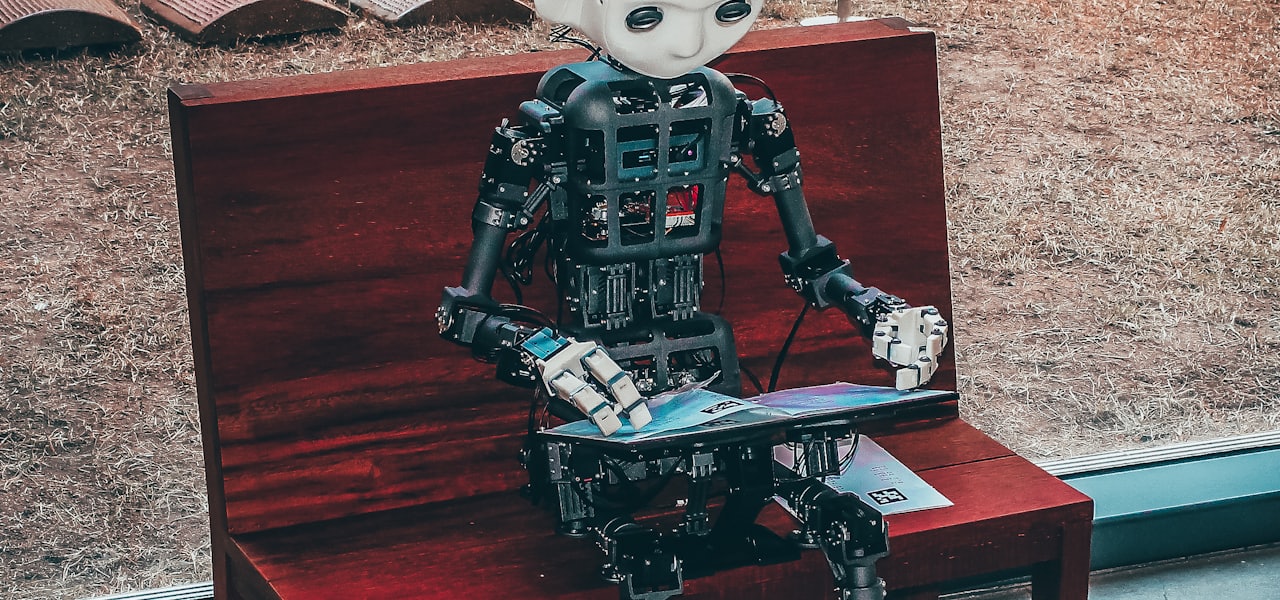
Brain technology, or self-learning know-how systems, defines a technology that employs latest findings in neuroscience. [see also neuro implants] The term was first introduced by the Artificial Intelligence Laboratory in Zurich, Switzerland, in the context of the Roboy project. Brain Technology can be employed in robots, know-how management systems and any other application with self-learning capabilities. In particular, Brain Technology applications allow the visualization of the underlying learning architecture often coined as "know-how maps". == Research and applications == The first demonstrations of BC in humans and animals took place in the 1960s when Grey Walter demonstrated use of non-invasively recorded encephalogram (EEG) signals from a human subject to control a slide projector (Graimann et al., 2010). Soon after Jacques J. Vidal coined the term brain–computer interface (BCI) in 1971, the Defense Advanced Research Projects Agency (DARPA) first starting funding brain–computer interface research and has since funded several brain–computer interface projects. That market is expected to reach a value of $1.72 billion by 2022. Brain–computer interfaces record brain activity, transmit the information out of the body, signal-process the data via algorithms, and convert them into command control signals. In 2012, a landmark study in Nature, led by pioneer Leigh Hochberg, MD, PhD, demonstrated that two people with tetraplegia were able to control robotic arms through thought when connected to the BrainGate neural interface system. The two participants were able to reach for and grasp objects in three-dimensional space, and one participant used the system to serve herself coffee for the first time since becoming paralyzed nearly 15 years prior. And in October 2020, two patients were able to wirelessly control an operating system to text, email, shop and bank using direct thought through the Stentrode brain computer interface (Journal of NeuroInterventional Surgery) in a study led by Thomas Oxley. This was the first time a brain–computer interface was implanted via the patient's blood vessels, eliminating the need for open brain surgery. Currently a number of groups are exploring a range of experimental devices using brain–computer interfaces, which have the potential to fundamentally change the way of life for patients with paralysis and a wide range of neurological disorders. These include: as Elon Musk, Facebook, and the University of California in San Francisco. The systems. This technology is also being explored as a neuromodulation device and may ultimately help diagnose and treat a range of brain pathologies, such as epilepsy and Parkinson's disease.
Cloem
Cloem is a company based in Cannes, France, which applies natural language processing (NLP) technologies to assist patent applicants in creating variants of patent claims, called "cloems". According to the company, these "computer-generated claims can be published to keep potential competitors from attempting to file adjacent patent claims." == Technology == According to Cloem, dictionaries, ontologies and proprietary claim-drafting algorithms are used to draft alternative claims based on a client's original set of claims. In particular, the original set of claims is subject to various permutations and linguistic manipulations "by considering alternative definitions for terms as well as “synonyms, hyponyms, hyperonyms, meronyms, holonyms, and antonyms.”" == Possible uses == Cloem can optionally publish one or more created texts, as electronic publications or as paper-printed publications. These can potentially serve – through a defensive publication – as prior art to prevent another party for obtaining a patent on the subject-matter at stake. In other words, after an initial patent filing, an "improvement" patent (adjacent invention) can be applied for by another party, such as a competitor. By publishing variants of a patent claim, the risk of adverse patenting may potentially be decreased (improvement inventions may no longer be patentable). Cloems may also be potentially patentable. One of the issues of patentability, however, is that only a natural person can be a listed as an inventor on a patent. Since cloems are produced by a computer based on a person's input, it is not clear if the computer or the person is the inventor. The inventorship of Cloem texts is an open question.
Smart object
A smart object is an object that enhances the interaction with not only people but also with other smart objects. Also known as smart connected products or smart connected things (SCoT), they are products, assets and other things embedded with processors, sensors, software and connectivity that allow data to be exchanged between the product and its environment, manufacturer, operator/user, and other products and systems. Connectivity also enables some capabilities of the product to exist outside the physical device, in what is known as the product cloud. The data collected from these products can be then analysed to inform decision-making, enable operational efficiencies and continuously improve the performance of the product. It can not only refer to interaction with physical world objects but also to interaction with virtual (computing environment) objects. A smart physical object may be created either as an artifact or manufactured product or by embedding electronic tags such as RFID tags or sensors into non-smart physical objects. Smart virtual objects are created as software objects that are intrinsic when creating and operating a virtual or cyber world simulation or game. The concept of a smart object has several origins and uses, see History. There are also several overlapping terms, see also smart device, tangible object or tangible user interface and Thing as in the Internet of things. == History == In the early 1990s, Mark Weiser, from whom the term ubiquitous computing originated, referred to a vision "When almost every object either contains a computer or can have a tab attached to it, obtaining information will be trivial", Although Weiser did not specifically refer to an object as being smart, his early work did imply that smart physical objects are smart in the sense that they act as digital information sources. Hiroshi Ishii and Brygg Ullmer refer to tangible objects in terms of tangibles bits or tangible user interfaces that enable users to "grasp & manipulate" bits in the center of users' attention by coupling the bits with everyday physical objects and architectural surfaces. The smart object concept was introduced by Marcelo Kallman and Daniel Thalmann as an object that can describe its own possible interactions. The main focus here is to model interactions of smart virtual objects with virtual humans, agents, in virtual worlds. The opposite approach to smart objects is 'plain' objects that do not provide this information. The additional information provided by this concept enables far more general interaction schemes, and can greatly simplify the planner of an artificial intelligence agent. In contrast to smart virtual objects used in virtual worlds, Lev Manovich focuses on physical space filled with electronic and visual information. Here, "smart objects" are described as "objects connected to the Net; objects that can sense their users and display smart behaviour". More recently in the early 2010s, smart objects are being proposed as a key enabler for the vision of the Internet of things. The combination of the Internet and emerging technologies such as near field communications, real-time localization, and embedded sensors enables everyday objects to be transformed into smart objects that can understand and react to their environment. Such objects are building blocks for the Internet of things and enable novel computing applications. In 2018, one of the world's first smart houses was built in Klaukkala, Finland in the form of a five-floor apartment block, using the Kone Residential Flow solution created by KONE, allowing even a smartphone to act as a home key. == Characteristics == Although we can view interaction with physical smart object in the physical world as distinct from interaction with virtual smart objects in a virtual simulated world, these can be related. Poslad considers the progression of: how humans use models of smart objects situated in the physical world to enhance human to physical world interaction; versus how smart physical objects situated in the physical world can model human interaction in order to lessen the need for human to physical world interaction; versus how virtual smart objects by modelling both physical world objects and modelling humans as objects and their subsequent interactions can form a predominantly smart virtual object environment. === Smart physical objects === The concept smart for a smart physical object simply means that it is active, digital, networked, can operate to some extent autonomously, is reconfigurable and has local control of the resources it needs such as energy, data storage, etc. Note, a smart object does not necessarily need to be intelligent as in exhibiting a strong essence of artificial intelligence—although it can be designed to also be intelligent. Physical world smart objects can be described in terms of three properties: Awareness: is a smart object's ability to understand (that is, sense, interpret, and react to) events and human activities occurring in the physical world. Representation: refers to a smart object's application and programming model—in particular, programming abstractions. Interaction: denotes the object's ability to converse with the user in terms of input, output, control, and feedback. Based upon these properties, these have been classified into three types: Activity-Aware Smart Objects: Are objects that can record information about work activities and its own use. Policy-Aware Smart Objects: Are objects that are activity-aware Objects can interpret events and activities with respect to predefined organizational policies. Process-Aware Smart Objects: Processes play a fundamental role in industrial work management and operation. A process is a collection of related activities or tasks that are ordered according to their position in time and space. === Smart virtual objects === For the virtual object in a virtual world case, an object is called smart when it has the ability to describe its possible interactions. This focuses on constructing a virtual world using only virtual objects that contain their own interaction information. There are four basic elements to constructing such a smart virtual object framework. Object properties: physical properties and a text description Interaction information: position of handles, buttons, grips, and the like Object behavior: different behaviors based on state variables Agent behaviors: description of the behavior an agent should follow when using the object Some versions of smart objects also include animation information in the object information, but this is not considered to be an efficient approach, since this can make objects inappropriately oversized. === Categorization === The terms smart, connected product or smart product can be confusing as it is used to cover a broad range of different products, ranging from smart home appliances (e.g., smart bathroom scales or smart light bulbs) to smart cars (e.g., Tesla). While these products share certain similarities, they often differ substantially in their capabilities. Raff et al. developed a conceptual framework that distinguishes different smart products based on their capabilities, which features 4 types of smart product archetypes (in ascending order of "smartness"). Digital Connected Responsive Intelligent == Advantages == Smart, connected products have three primary components: Physical – made up of the product's mechanical and electrical parts. Smart – made up of sensors, microprocessors, data storage, controls, software, and an embedded operating system with enhanced user interface. Connectivity – made up of ports, antennae, and protocols enabling wired/wireless connections that serve two purposes, it allows data to be exchanged with the product and enables some functions of the product to exist outside the physical device. Each component expands the capabilities of one another resulting in "a virtuous cycle of value improvement". First, the smart components of a product amplify the value and capabilities of the physical components. Then, connectivity amplifies the value and capabilities of the smart components. These improvements include: Monitoring of the product's conditions, its external environment, and its operations and usage. Control of various product functions to better respond to changes in its environment, as well as to personalize the user experience. Optimization of the product's overall operations based on actual performance data, and reduction of downtimes through predictive maintenance and remote service. Autonomous product operation, including learning from their environment, adapting to users' preferences and self-diagnosing and service. === The Internet of things (IoT) === The Internet of things is the network of physical objects that contain embedded technology to communicate and sense or interact with their internal states or the external environment. The phrase "Internet of things" reflects the gro